
Botox Injection Sites: Where Botox Is Injected and Why It Matters
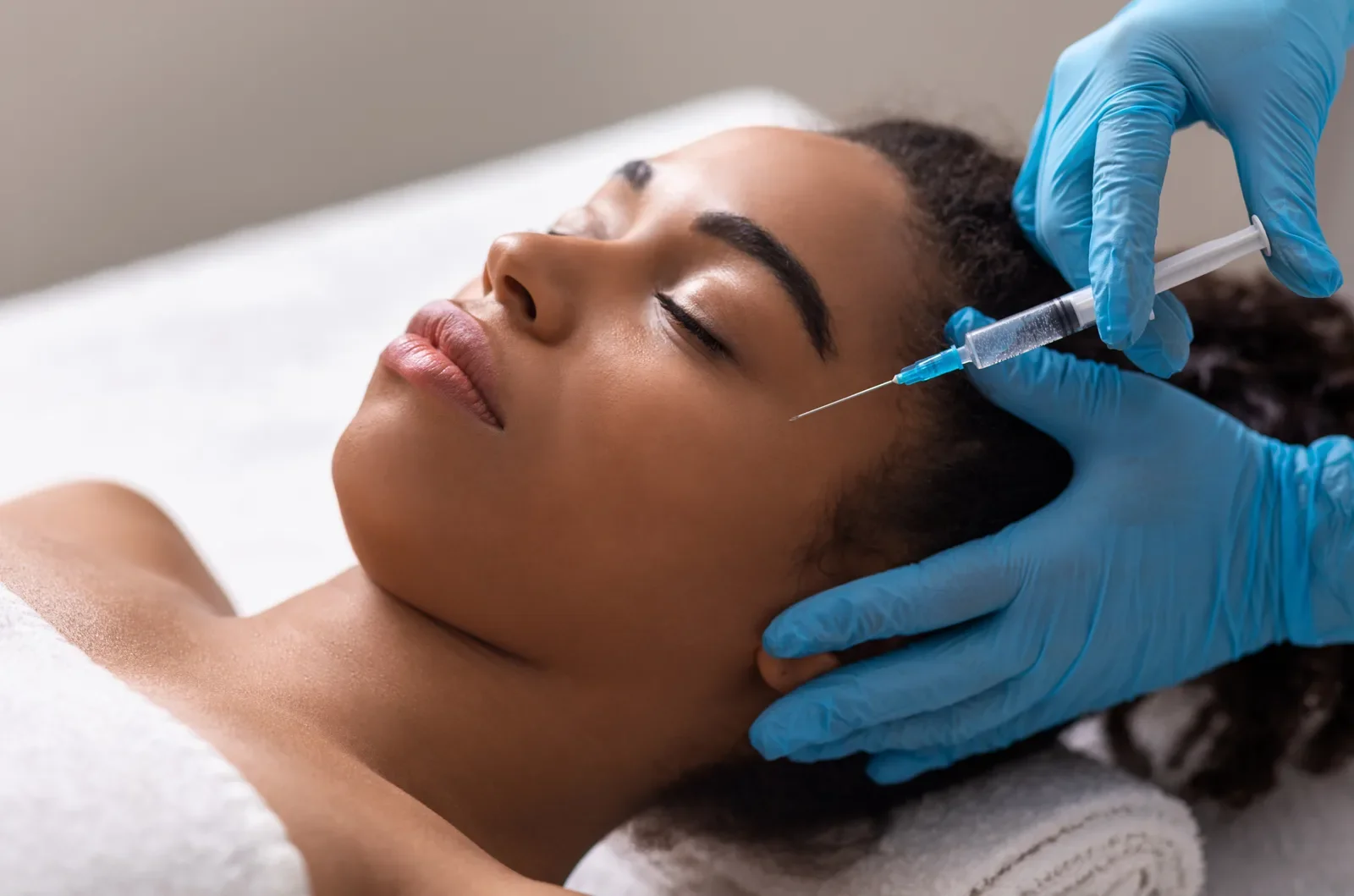
Botox injection sites determine everything about your results, from how natural your expression looks to how long the effects last. Understanding where Botox goes and why an injector chooses that exact spot can make you a more confident, informed patient. Whether you are considering Botox Cosmetic for the first time or exploring lesser-known treatment areas, knowing the anatomy behind the needle helps you know what to ask for at your consultation.
Key Takeaways
Botox is most commonly injected into the forehead, glabellar area, and crow's feet. These three zones target the frontalis, corrugator, and orbicularis oculi muscles and account for the majority of cosmetic Botox appointments.
Unit ranges vary widely by injection site. The forehead typically requires 10-30 units, while crow's feet use about 5-15 units per side, with men often needing higher doses due to stronger muscle mass.
Chronic migraine treatment uses a standardized 31-injection-site protocol. This FDA-approved approach, known as PREEMPT, spreads Botox across 7 head and neck muscle groups.
Botox can diffuse slightly beyond the injection point, but significant migration is rare with a skilled injector. Precise placement and proper dosing are the main safeguards against unwanted spread, such as temporary eyelid drooping.
Recovery sensations differ by treatment area. The forehead and glabella tend to bruise less than the lips or under-eye area, while masseter injections may feel like deeper pressure due to the thickness of the jaw muscle.
If you want a personalized map of the best injection sites for your face, schedule a consultation with JustBE Aesthetics to discuss your goals in detail.
The Most Common Cosmetic Botox Injection Sites
Most people book Botox injections to soften three specific zones: the forehead, the area between the brows, and the outer corners of the eyes. These sites are popular because they treat dynamic wrinkles, the lines that form from repeated facial expressions rather than sun damage or aging skin alone.
Forehead lines form from repeated contraction of the frontalis muscle, the broad muscle that lifts your eyebrows when you look surprised. Injecting small amounts of botulinum toxin along this muscle relaxes it just enough to smooth horizontal lines without freezing your ability to raise your brows naturally.
The glabellar lines, often called the "elevens" between your eyebrows, come from the corrugator and procerus muscles that pull your brows together when you frown or concentrate. Crow's feet at the outer eye corners are caused by the orbicularis oculi, the ring-shaped muscle that closes your eyelids. A few strategically placed injections along this muscle soften the fan-like lines that appear when you smile.
Some injectors also target specific points along the brow to achieve a subtle lift, using the same muscle relaxation principle to let the opposing muscles pull the brow upward slightly.
Beyond the Forehead: Less Obvious Areas Botox Can Treat
You may not realize Botox injections can address concerns well outside the upper face. Once you move past the standard three zones, botulinum toxin opens up a range of subtle refinements that many patients never consider until they ask about them directly.
A "lip flip" uses a tiny dose of Botox at the border of the upper lip to relax the muscle that curls the lip inward, creating the appearance of a fuller pout without any added volume. Chin dimpling, sometimes called a "golf ball chin," responds well to Botox placed directly into the mentalis muscle, smoothing the puckered texture that shows up when you talk or purse your lips.
Neck bands, caused by the platysma muscle, can also be softened with carefully placed injections along the vertical cords of the neck. For a slimmer jawline, Botox injected into the masseter muscle, the large muscle used for chewing, reduces its bulk over time and can also ease jaw tension from clenching. Even the tip of the nose can be treated to reduce a downward droop when you smile, a technique sometimes called a "nose lift."
Availability of these specific applications varies from practice to practice, so it is worth asking during your consultation which of them your provider offers.
How Many Units of Botox Are Typically Used Per Injection Site
How many units of Botox are used per injection site depends heavily on the muscle being treated and its strength. As a general guide, forehead treatment typically uses 10-30 units spread across several injection points, while the glabellar area between the brows usually requires 15-25 units.
Crow's feet are generally treated with 5-15 units per side, since the orbicularis oculi is a thinner muscle than the frontalis. Masseter treatment for jawline slimming often calls for a higher dose, sometimes 20-40 units per side, because the chewing muscle is dense and strong.
These figures are averages, not a fixed formula. A skilled injector customizes dosing based on your muscle strength, the depth of your existing lines, your gender, and your aesthetic goals. Men often require higher unit counts than women because facial muscles tend to be larger and more powerful in male patients. Your provider will determine your exact unit count during your consultation based on a hands-on muscle assessment.
Medical Botox Injection Sites: Migraines and Hyperhidrosis
Beyond cosmetic use, botulinum toxin also serves as an FDA-approved treatment for chronic migraines and excessive sweating. For migraines, providers follow the PREEMPT protocol, which uses a standardized map of 31 injection sites across 7 muscle groups in the head, neck, and shoulders. This approach is administered by neurologists and headache specialists as a preventive treatment rather than a same-day fix, and it deserves its own detailed discussion beyond this overview.
For hyperhidrosis, or excessive sweating, Botox is injected directly into the skin at the underarms, palms, or soles of the feet. The toxin blocks the nerve signals that activate sweat glands in the treated area, reducing sweating near the injection site for several months at a time. Both of these medical applications rely on the same mechanism as cosmetic Botox, temporarily blocking nerve-to-muscle or nerve-to-gland communication, just applied to a different purpose.
How Far Does Botox Spread From the Injection Site?
Botox can diffuse a small distance from the exact injection point, but significant spread is uncommon when an experienced injector places it correctly. Diffusion refers to the toxin moving slightly through the surrounding tissue rather than staying in a single pinpoint location, which is actually expected and factored into dosing.
Problems arise only when Botox migrates further than intended, such as forehead injections spreading down toward the eyelid and causing temporary drooping, known as ptosis. This is one of the more talked-about Botox side effects patients ask about before their first appointment.
The risk of unwanted spread is minimized through precise injection depth, accurate placement relative to the muscle, and appropriate dosing for the treatment area. This is exactly why the injector's technique and experience matter as much as the product itself.
What to Expect at Each Injection Site During and After Treatment
The injection experience varies noticeably depending on the area being treated. Forehead and glabellar injections use a very fine needle and typically feel like a quick pinch, while lip flip injections may feel slightly more sensitive due to the number of nerve endings in that area.
Masseter injections can feel like a deeper pressure sensation since the needle passes through a thicker, denser muscle. Areas like the lips and under-eyes tend to bruise more easily than the forehead because the skin is thinner and blood vessels sit closer to the surface.
Across most sites, you can expect mild redness, small bumps at the injection points, and occasional tenderness that resolves within a few hours to a couple of days. These localized effects are normal and site-specific rather than a sign of a problem. Our guide to preparing for Botox covers what to do before you arrive.
Frequently Asked Questions About Botox Injection Sites
Can Botox move from the injection site?
Botox can diffuse slightly beyond the exact injection point, but significant movement away from the treated area is uncommon with proper technique. Choosing an experienced injector who understands facial anatomy is the best way to minimize this risk.
How many units of Botox are used per injection site?
Unit counts vary by area, with the forehead typically needing 10-30 units and crow's feet needing about 5-15 units per side. Your provider customizes these numbers based on your muscle strength and treatment goals.
Where are the 31 injection sites for Botox migraines?
The PREEMPT protocol for chronic migraines spreads 31 injection points across 7 muscle groups in the forehead, temples, back of the head, neck, and shoulders. This standardized map is used specifically for medical migraine treatment, not cosmetic appointments.
How far does Botox spread from the injection site?
Botox generally stays within a small radius of the injection point when placed correctly. Unintended spread, such as toward the eyelid from forehead injections, is rare but is one reason precise injector technique matters so much.
Can Botox stop sweating near the injection site?
Yes, when injected for hyperhidrosis, Botox blocks the nerve signals that trigger sweat glands in that specific area, such as the underarms or palms. The reduction in sweating typically lasts several months before the effect gradually wears off.
Ready to Explore Botox in Dallas, Texas?
At JustBE Aesthetics, every Botox appointment is administered by Dr. Marchuk, who evaluates your facial muscles and goals before determining the right injection sites and dosing for you. Call (469) 804-7212 to ask questions before booking. You can also learn more about our Botox treatments or explore complementary options like dermal fillers if you are considering a fuller facial refresh. Contact JustBE Aesthetics in Dallas, Texas to schedule your consultation and get answers tailored to your face.